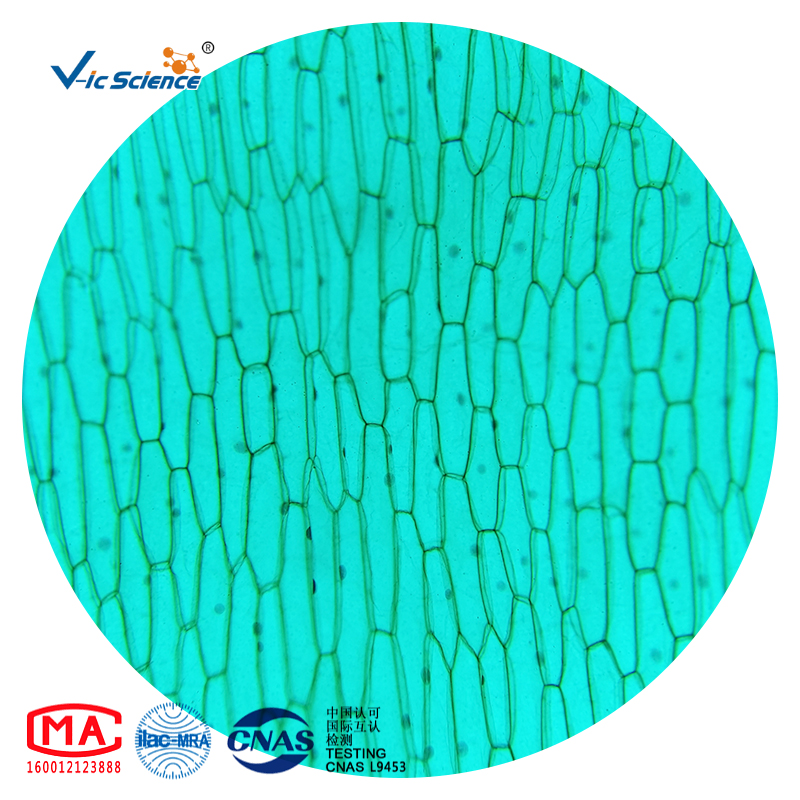
In order to make the object image visible, the material to be observed is processed into a thin and transparent specimen. The main categories include: animals, plants, human body, pathology, parasites, microorganisms, blood testing, rock grinding, etc.

1. Biological slide specimens are divided into permanent slides and temporary slides according to the storage time.
Temporary slide: it is made on the spot or recently during the experiment, in preparation for the current or recent experiment.
Permanent loading: it is generally made in the factory. There will be some sealing substances on the loading to seal the slide and cover slide, which is generally used repeatedly for a long time.
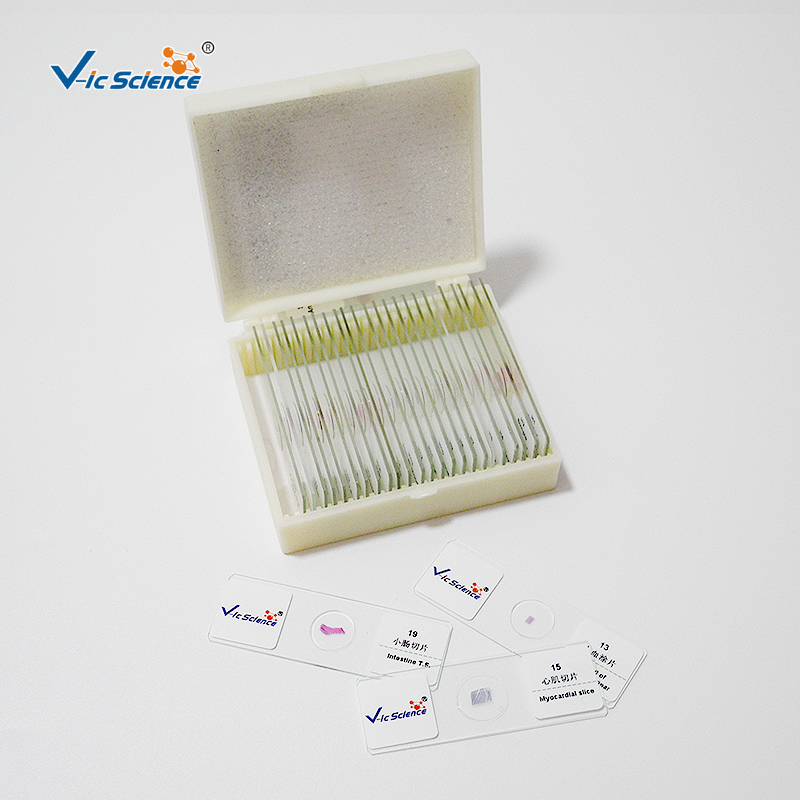
2. According to the production materials and methods, it can be divided into slicing, smearing and loading
Section: a kind of slide specimen. A thin slice of animal and plant tissue for observation under an optical or electron microscope. Due to different requirements, the tissue can be sliced by hand with a knife, or the tissue block can be embedded in paraffin or collodion, or frozen at low temperature and sliced with a microtome. Cut into 5-10 micron thin slices, such as vein slices and plant stem slices.
Loading: biological slide specimens made by picking, tearing and scraping from organisms, also known as loading.
Samples made by evenly smearing liquid samples (such as blood, bone marrow fluid, etc.) collected from organisms on glass tablets, such as human blood tablets.