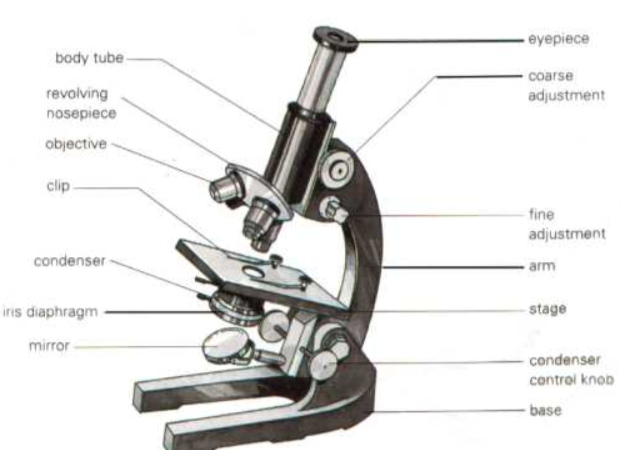
The microscope is one of the greatest inventions of the 20th century. Galileo, an Italian scientist, and Levin Hooke, a Dutch textile merchant, were the first to use a microscope for scientific observation. The former observed the compound eyes of insects, and the latter observed many animal and plant cells through their own ground lenses. The use of microscope in science has opened the door to a new world for people, enabled people to see things invisible to the naked eye, and refreshed human cognition of the biological world.
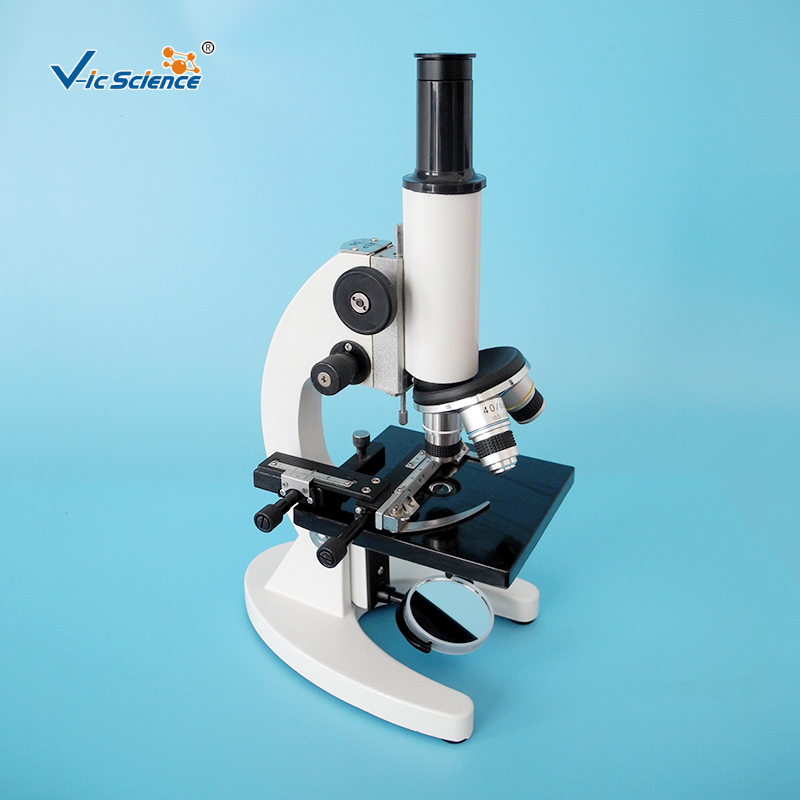
According to the imaging principle, microscope can be divided into optical microscope and electron microscope. Junior high school biology generally uses an optical microscope. When conducting experiments that need a microscope, teachers can well demonstrate and explain the operation method of the microscope for students.
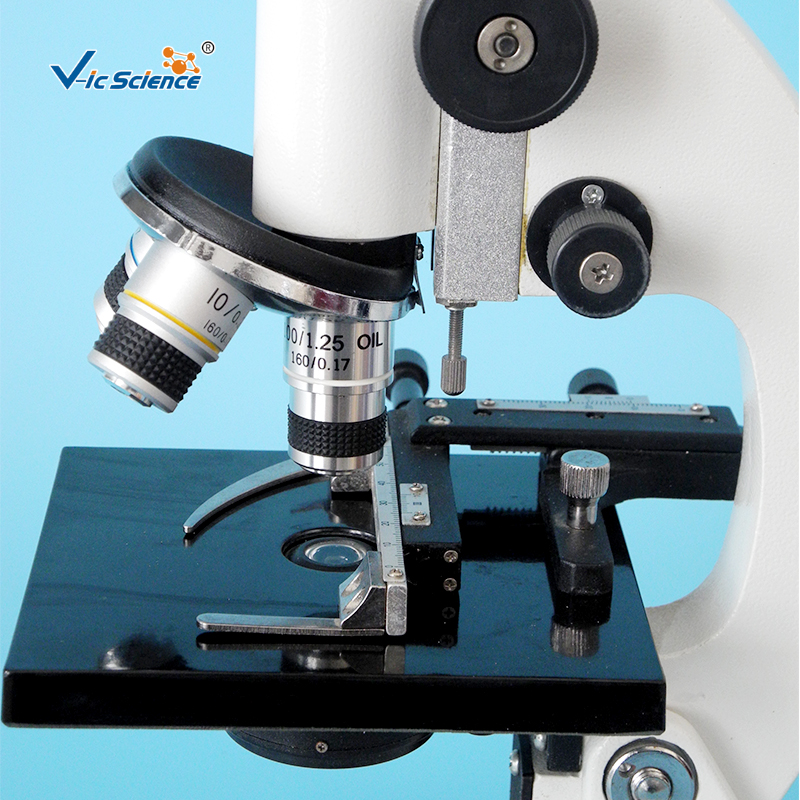
As the name suggests, optical microscope consists of optical imaging and is structurally divided into three parts: optics, lighting and machinery. The optical part is composed of eyepiece, objective lens, reflector and concentrator. Generally, the optical microscope used in biology in junior middle school has a relatively simple structure, and some microscopes may not have a condenser. Some microscopes have vernier calipers on the stage for measuring the size of specimens.