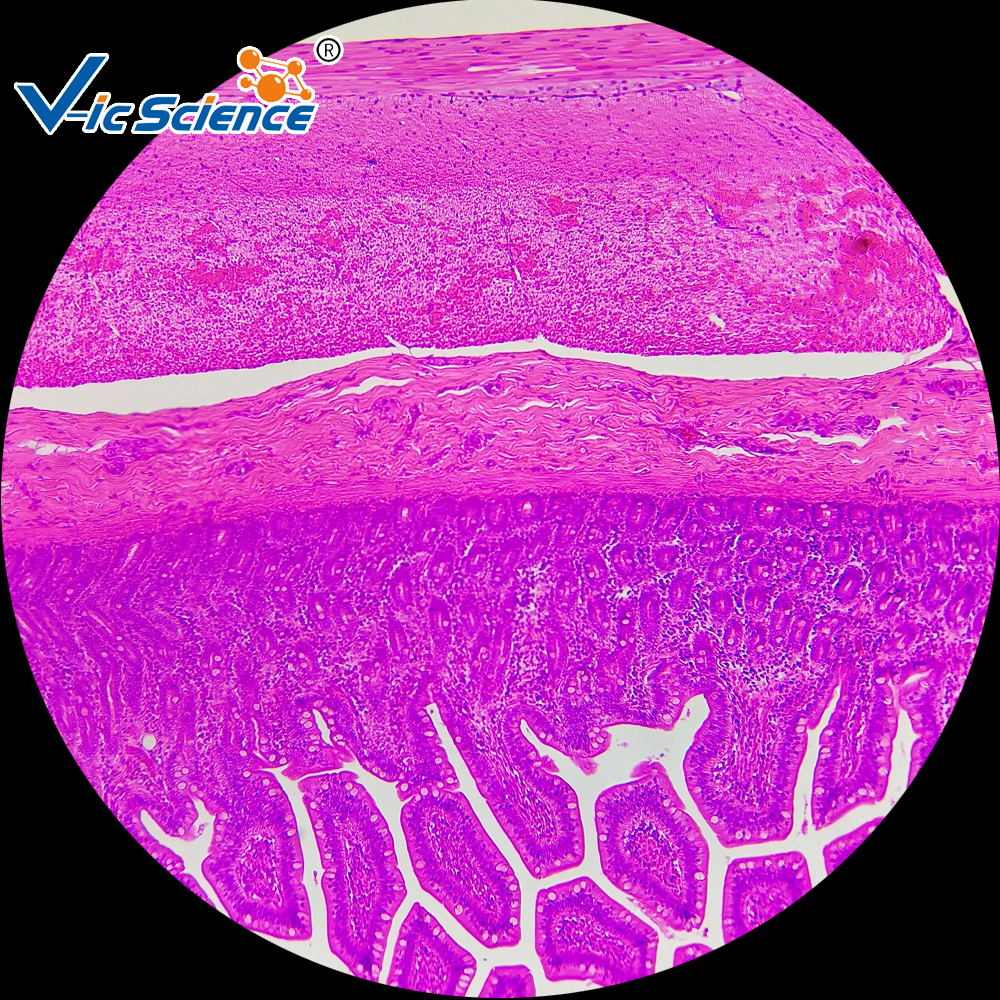
Dyeing is to use dyes to give color on tissue sections to make them interact with certain components in tissues or cells. After transparency, through spectral absorption and refraction, various micro structures can show different colors, and various components of tissues and cells can be displayed under the microscope.
Physical action of dyeing
Using capillary phenomenon, penetration, absorption and adsorption, the pigment particles of dyes can firmly enter the tissue cells and make them color.
Absorption: the tissue absorbs the dye and binds firmly; The coloring of the tissue is the same as that of the solution
Adsorption is the characteristic of solid substances, that is, larger objects can adsorb some small particles (compounds or ions) from the surrounding dye solution to their own characteristics; Various proteins or colloids in cells have different adsorption surfaces, so they can selectively absorb different ions, but have no adsorption on other dyes, which can explain the phenomenon of differential staining.
The chemical action of dyeing is that the dyes penetrating into tissue cells react with their corresponding substances to produce colored compounds.
Conclusion: the purpose of staining is to make different staining of tissues and intracellular structures with the help of one or more dyes, so that the internal structure of cells can be clearly observed under the microscope and a correct judgment can be made.